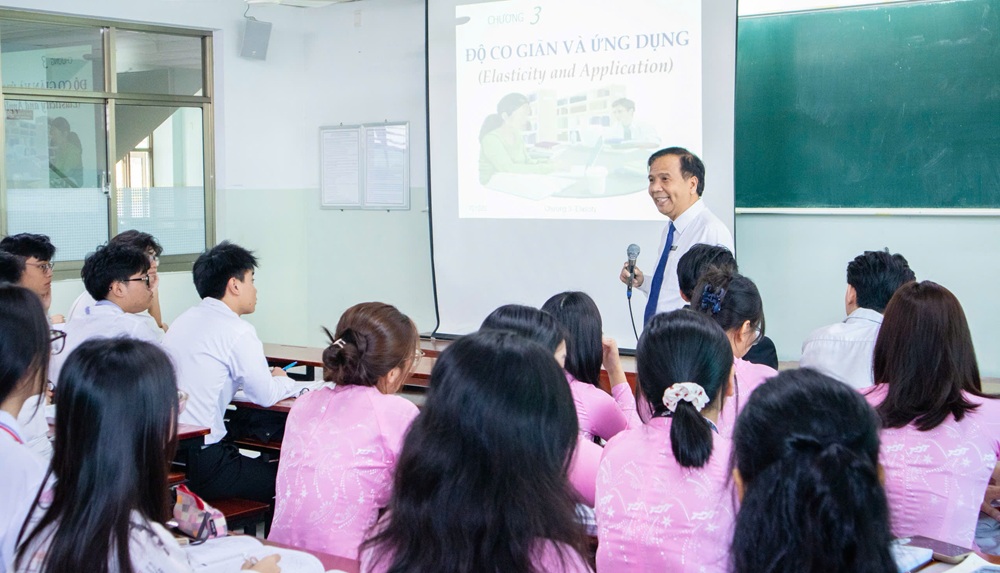
International Joint Training Programs refer to a study model in which students are transferred to the campuses of international partner universities for their education and graduation. This is an international campus mobility program in which Phase 1 is completed at a campus in Vietnam, and Phase 2 is undertaken at and culminates in graduation from a campus of an overseas university within the international education network of Ton Duc Thang University (TDTU).
- Bachelor of Business Administration Program - University of Economics and Business Prague - K7340101
-
2 years of study at Ton Duc Thang University, 2 years of study at the University of Economics and Business Prague
Website: https://www.vse.cz/english1. Program Duration: 4 years, divided into 2 phases
Phase 1: 2 years of study at Ton Duc Thang University, 19 Nguyen Huu Tho Street, Tan Hung Ward, Ho Chi Minh City, Vietnam.
Phase 2: 2 years of study at the University of Economics and Business Prague, Czech Republic.2. Degree Awarded: Graduates will receive two bachelor’s degrees
Ton Duc Thang University awards the Bachelor of Business Administration degree.
The University of Economics and Business Prague awards the Bachelor of Business Administration degree.
The degrees are internationally recognized and officially accredited by the Vietnamese Ministry of Education and Training.3. Program Objectives
3.1. Knowledge:Graduates of the Bachelor of Business Administration program are equipped with fundamental knowledge of management, economics, and social sciences, as well as an understanding of enterprise development in Vietnam and worldwide; possess general knowledge of the operations of all types of enterprises, the business environment, and general management functions within organizations; students are provided with in-depth and up-to-date knowledge of entrepreneurship and business administration for various types of enterprises in a market-oriented economy; knowledge of tools and methods for applying scientific principles of business administration in practical activities appropriate to specific environmental conditions; solid knowledge of processes and operational procedures within enterprises; knowledge of issues related to legal regulations and ethical standards in business operations; understand social psychological behavior and the conduct of individuals and organizations in the business environment; understand the importance of service quality, customer relationships, and customer needs.
3.2. Skills:
- Ability to formulate and develop business plans for projects and startup initiatives;
- Ability to manage and operate daily business activities of enterprises or teams within organizations;
- Ability to apply analytical and evaluative skills to assess the business environment and markets;
- Ability to analyze and forecast trends and requirements of different customer segments;
- Ability to identify problems, formulate issues, and solve general business problems and specific management issues;
- Ability to design workflows for departments; negotiation and business bargaining skills;
- Proficiency in using management software, financial planning software, and exploiting information resources on the Internet;
- Proficiency in using English in transactions and negotiations; communication, presentation, and media skills.
3.3. Professional Attitudes and Ethics:
Possess good moral character and a spirit of solidarity and mutual support; demonstrate responsibility, professional conscience, discipline, industrial working style, and a positive service attitude; possess civic responsibility, behavior consistent with social norms and laws, and dedication to work.
4. Career Opportunities:
After graduation, students may undertake positions such as: human resource management, marketing and advertising, business development, finance, investment, planning, project management, quality management, customer service, management consulting, strategic consulting at multinational corporations, joint ventures, financial institutions, law firms, global consulting firms, and import–export companies; academic and research staff at educational institutions, research institutes in the field of business, or agencies involved in business policy formulation.5. Curriculum Framework:
5.1. Phase 1 Curriculum (Studied at Ton Duc Thang University)5.1.1. English Language Knowledge
Based on actual training capacity, the University organizes for students enrolled in the International Joint Training Program the World English (Intensive) English curriculum.
Note: Students who possess a valid international English certificate IELTS 5.5 or equivalent will be exempted from the English language modules.No.
Course Title
Level
Credits
Classroom Hours
1
Intensive Preliminary English
B1
5
225
2
Influencer English
B1+
5
120
3
Researcher English
B2
5
120
4
International Certificate Examination Preparation
B2
5
75
Total
20
60
5.1.2. General Education Knowledge
No.
Course Title (English)
Credits
1
TDTU Essential Skills for Sustainable Development
3
2
Ho Chi Minh Ideology
2
3
History of the Vietnamese Communist Party
2
4
Fundamentals of Informatics 1
2
5
Fundamentals of Informatics 2
2
6
Swimming
0
7
Physical Education 1
0
8
Physical Education 2
0
9
Introduction to Laws
2
10
Mathematics for Economists
3
11
Statistics for Business and Economics
4
12
Philosophy of Marxism–Leninism
3
13
Scientific Socialism
2
14
Political Economy of Marxism–Leninism
2
15
National Defense and Security Education – 1st Course
0
16
National Defense and Security Education – 2nd Course
0
17
National Defense and Security Education – 3rd Course
0
18
National Defense and Security Education – 4th Course
0
Total accumulated credits
27
5.1.3. Foundation and Major Knowledge
No.
Course Title
Credits
1
Microeconomics
4
2
Macroeconomics
4
3
Principles of Accounting
3
4
Business Research Methods
3
5
Contract Law
3
6
Trends in the World Economy
3
7
Company Law
2
Total accumulated credits
22
5.2. Phase 2 Curriculum Framework (Studied at the University of Economics and Business Prague)
No.
Course Title
Credits (ECTS)
1
Organizational Behavior
6
2
Personnel Management I
6
3
Consumer Behavior
5
4
Management
4
5
Operations Management
5
6
Business Ethics
4
7
Marketing
6
8
Quality, Environment, Health and Safety Management
3
9
Financial Mathematics
6
10
Audit and Controlling
6
11
Corporate Finance
6
12
English IV / or equivalent to BEC Higher Certificate
3
13
Logistics
6
14
Foundations of Corporate Strategy
6
15
Entrepreneurship
6
16
Electives
10
17
Managerial Accounting and Performance Analysis
6
18
Organizational Architecture
4
19
Electives
16
20
Bachelor Thesis Defence
3
21
State Examination in Study Program
3
Total accumulated credits – Phase 2
119
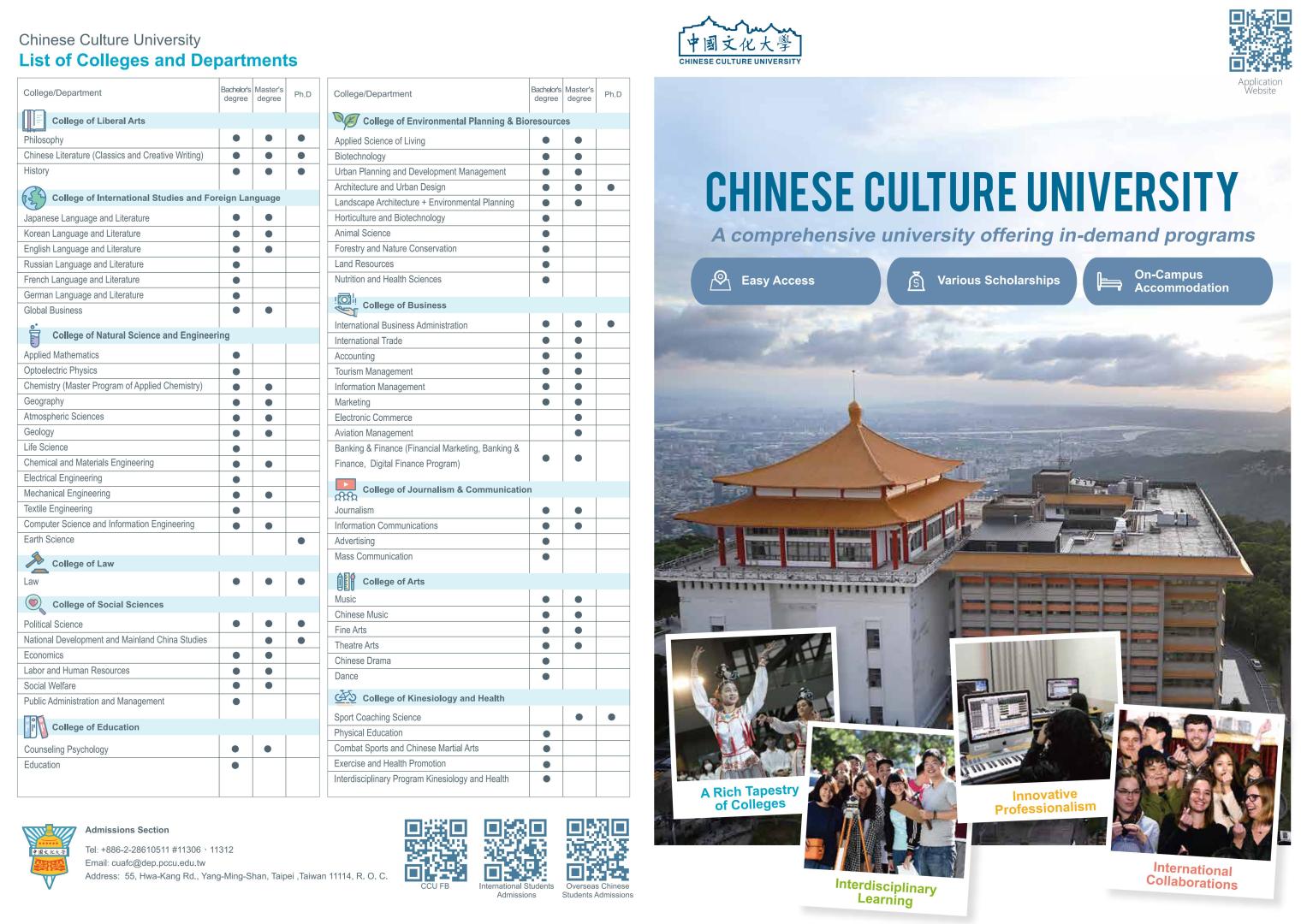
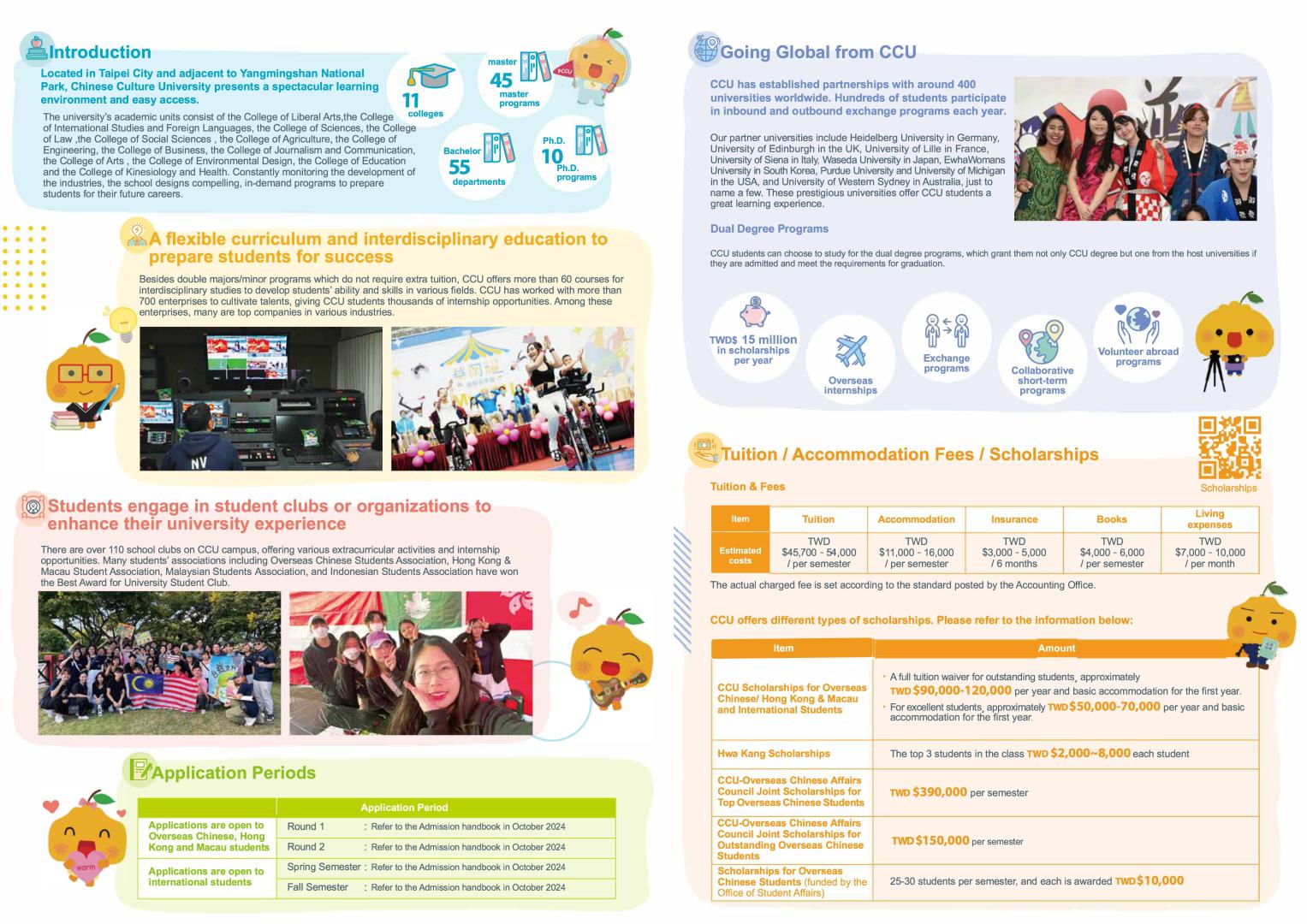
- Bachelor’s Program in Global Business - Chinese Culture University (Taiwan) - K7340101D
-

The Bachelor’s Program in Global Business equips students with comprehensive knowledge of international trade, global marketing, finance and investment, and supply chain management in multicultural environments. Students develop strategic thinking, global integration competencies, and professional skills to thrive in the digital economy.
Upon graduation, students can pursue careers in multinational corporations, FDI enterprises, banks, logistics companies, and trade promotion organizations, taking on roles such as international business executive, import–export specialist, global marketing officer, and market and investment analyst.
https://admission.tdtu.edu.vn/dai-hoc/nganh-hoc/kinh-doanh-toan-cau#lien-ket-quoc-te-K7340101D
- Bachelor’s Program in Hotel and Restaurant Management - Taylor’s University - K7340101N
-
Study duration: 2.5 years at Ton Duc Thang University, 1.5 years at Taylor’s University
Website: http://www.university.taylors.edu.my1. Program Duration
The program lasts 4 years, divided into 2 phases:
Phase 1: 2.5 years of study at Ton Duc Thang University, 19 Nguyen Huu Tho Street, Tan Hung Ward, Ho Chi Minh City, Vietnam.
Phase 2: 1.5 years of study at Taylor’s University, Malaysia.2. Degree Awarded
Upon graduation, students will be awarded two bachelor’s degrees:Ton Duc Thang University awards the Bachelor of Business Administration, majoring in Hotel and Restaurant Management.
Taylor’s University awards the Bachelor of International Hotel and Restaurant Management.3. Program Objectives
3.1. KnowledgeGraduates are expected to:
- Understand, analyze, evaluate, and apply general and fundamental knowledge of the service industry in general, as well as foundational perspectives and advanced development trends in hotel and restaurant management theories in particular;
- Understand, analyze, evaluate, and develop standard operating procedures in business operations; master fundamental and advanced principles and skills for delivering high-quality services; understand customer psychology and adapt service activities to different customer segments;
- Understand, analyze, and apply knowledge related to business ethics and legal standards in the industry, as well as requirements set by relevant authorities and associations regarding service quality standards, including technology and food safety and hygiene;
- Understand and analyze data and information used in planning, organizing, managing, and operating business activities, as well as in scientific research within the hotel and restaurant industry.
3.2. Skills
Graduates are expected to:
- Possess professional skills that enable them to plan business operations for departments or small- and medium-sized enterprises, or participate in strategic planning for large-scale enterprises in the industry;
- Possess essential skills to organize and manage work, operate workflows, and manage daily operations of specialized departments in both domestic and international enterprises; master core and advanced professional competencies, and be capable of developing, evaluating, and analyzing standard operating procedures and management policies in hotel and restaurant businesses;
- Demonstrate essential skills of a future manager, including the ability to work independently and in teams, identify and resolve operational issues in enterprises and industry-related organizations; possess customer service skills, communication skills, negotiation skills in international business, and the ability for self-directed learning and in-depth research when required.
3.3. Attitude and Professional Ethics
Graduates are expected to:
- Demonstrate a professional service-oriented attitude, high responsibility, strong professional ethics, honesty, solidarity, and willingness to support others;
- Maintain a strong sense of teamwork, professional demeanor, and high-quality service attitude;
- Exhibit global citizenship responsibility, professional conduct aligned with social norms and legal standards in an integrated international environment.
4. Career Opportunities
Upon graduation, students may work in positions such as:- Participating in the management and operation of enterprises in the hotel and restaurant sector, including restaurants, hotels, resorts, tourist areas, recreation and entertainment centers, convention centers, exhibitions, and banquet services;
- Working directly or managing specialized departments in international-standard enterprises, such as front office, housekeeping, food and beverage, conference and events, sales, and human resources departments;
- Serving as consultants in administrative and professional management roles for hotel and restaurant service corporations; participating in professional training and education at universities, colleges, vocational schools, and professional training centers.
5. Curriculum Framework
5.1. Phase 1 Curriculum (Studied at Ton Duc Thang University)5.1.1. English Language Knowledge
Based on actual training capacity, students enrolled in the International Joint Training Program will undertake the World English (Intensive) English language program.
Note: Students who possess a valid international English certificate equivalent to IELTS 5.5 or higher will be exempted from the English language courses.No.
Course Title
Level
Credits
In-class Hours
1
Intensive Preliminary English
B1
5
225
2
Influencer English
B1+
5
120
3
Researcher English
B2
5
120
4
International Certificate Examination Preparation
B2
5
75
Total
20
540
5.1.2. General Education Courses
No.
Course Title (English)
Credits
1
TDTU Essential Skills for Sustainable Development
3
2
Ho Chi Minh Ideology
2
3
History of the Vietnamese Communist Party
2
4
Philosophy of Marxism and Leninism
3
5
Scientific Socialism
2
6
Political Economy of Marxism and Leninism
2
7
Fundamentals of Informatics 1
2
8
Fundamentals of Informatics 2
2
9
Swimming
0
10
Physical Education 1
0
11
Physical Education 2
0
12
Introduction to Law
2
13
Mathematics for Economists
3
14
Statistics for Business and Economics
4
15
National Defense and Security Education – Course 1
0
16
National Defense and Security Education – Course 2
0
17
National Defense and Security Education – Course 3
0
18
National Defense and Security Education – Course 4
0
Total Credits
27
5.1.3. Foundation and Major Courses
No.
Course Title (English)
Credits
1
Microeconomics
3
2
Macroeconomics
3
3
Principles of Accounting
3
4
Principles of Marketing
3
5
Principles of Management
3
6
Company Law
2
7
Business Research Methods
3
8
E-commerce
3
9
Careers in Hospitality Management
2
10
Food and Beverage Operations 1
2
11
Food and Beverage Operations 2
2
12
Beverage Studies
2
13
Housekeeping Operations
2
14
Front Office Operations
2
15
Hospitality Marketing
3
16
Consumer Behavior
3
17
Negotiation in the Hospitality Industry
3
18
Financial Management
3
19
Sales Management in the Hospitality Industry
3
20
Food and Beverage Management
3
21
Front Office Management
3
22
Housekeeping Management
3
23
MICE Management
3
24
Internship 1
2
25
Qualification Examination
2
Total Credits
66
5.2. Phase 2 Curriculum (Studied at Taylor’s University)
No.
Course Title
Credits
1
U Module – Islamic Civilization & Asian Civilization / Communicative Malay Language 2
3
2
U Module – Ethnic Relations / Malaysian Studies 3
3
3
Food Safety and Sanitation
4
4
Hospitality Management and Leadership
4
5
Basic French
4
6
Research Methods
4
7
U2 Module – Life Skills for Success and Wellbeing / BKA
2
8
U3 Module – Millennials in Malaysia: Team Dynamics and Relationship Management
2
9
U4 Module – Social Innovation Project
2
10
Understanding Entrepreneurialism
4
11
Hospitality Business Modeling and Simulations
4
12
Research Project
4
13
Hotel Innovation Management
4
14
Internship
12
Total Credits (Phase 2)
56
- Bachelor’s Program in International Business - La Trobe University - K7340120L
-
Study duration: 3 years at Ton Duc Thang University, 1 year at La Trobe University
Website: https://www.latrobe.edu.au
La Trobe University – Koru Education1. Program Duration
The program lasts 4 years, divided into 2 phases.
Phase 1: 3 years of study at Ton Duc Thang University, District 7 Campus, Ho Chi Minh City, Vietnam.
Phase 2: 1 year of study at La Trobe University, Australia.2. Degree Awarded
Upon graduation, students will receive two bachelor’s degrees:
Ton Duc Thang University awards the Bachelor of International Business degree, and La Trobe University awards the Bachelor of Business, majoring in International Business.3. Program Objectives
3.1. Knowledge- Demonstrate an understanding of and ability to analyze microeconomic principles in order to examine market mechanisms that determine relative prices of goods and services and the allocation of limited resources among alternative uses by economic agents, including situations in which markets do not operate efficiently, as well as to describe the theoretical conditions required for perfect competition;
- Explain the relationships among key macroeconomic factors such as national income, output, consumption, unemployment, inflation, savings, investment, multinational trade, and international finance; apply economic models and forecasts commonly used by governments and large corporations to develop and evaluate economic policies and managerial strategies;
- Understand and apply statistical methods and econometric models to identify economic patterns in a market economy or to solve managerial and decision-making problems within enterprises;
- Understand and apply knowledge of management, finance, accounting, and marketing in business organizations in general and in international business activities in particular;
- Understand and analyze key elements of international business, including the international business environment, international business law, international economic relations, international finance, and international investment project management;
- Understand and apply knowledge and professional practices in international trade contract negotiation and the organization and execution of foreign trade contracts;
- Understand and apply theoretical knowledge and professional skills in transportation, freight forwarding, and logistics through practical internships and professional training periods;
- Understand and integrate knowledge and professional practices in logistics, management, operations, finance, marketing, and human resource management to implement at least one project related to logistics solutions or supply chain management.
3.2. Skills
3.2.1. Professional Skills
Ability to collect, analyze, and evaluate business data and effectively use information; business planning skills; supply chain management skills; import–export management, logistics, and international payment skills; human resource management skills in a globally integrated environment; problem-solving skills and innovative thinking skills.
3.2.2. Soft Skills
Effective teamwork and collaboration skills; effective and appropriate communication skills in a multicultural environment; proficiency in foreign languages, information technology, and application software; negotiation, presentation, report writing, and communication skills; effective time management skills; skills in building and developing community and professional networks.
3.3. Professional Attitudes and Ethics
- Comply strictly with national laws and regulations as well as the rules and policies of employing organizations;
- Demonstrate a self-disciplined, responsible, and proactive work attitude toward assigned tasks, teams, oneself, and the community;
- Exhibit a professional working attitude, characterized by friendliness, respect, and appropriate conduct in multinational business environments;
- Possess strong professional ethics, including integrity, confidentiality of customer and corporate information, and a high sense of organizational discipline;
- Demonstrate initiative, adaptability, resilience, ambition, and self-confidence, with the ability to work independently, a strong sense of community service, and a commitment to international integration and cooperation;
- Obtain required certificates and certifications in English proficiency, information technology, and soft skills in accordance with program regulations.
4. Career Opportunities
- Graduates of the International Business (3+1 Dual-Degree Program) are well prepared to work effectively in multinational environments and to undertake various roles within business organizations;
- Career opportunities include, but are not limited to, positions such as Business Consultant, Business Analyst, Import–Export Specialist, Logistics and Supply Chain Management Officer, International Payment Specialist, Executive Advisor, and other key functional roles in the global business environment, as well as International Market Development and Market Research Specialist;
- Graduates may pursue further academic studies, research, and teaching in business and management-related fields at organizations and institutions;
- With foundational knowledge and accumulated professional experience, graduates may also pursue entrepreneurial opportunities, particularly in logistics services and supply chain management;
- Graduates have opportunities to undertake postgraduate studies at domestic and international higher education institutions.
- Bachelor of Business Administration Program - emlyon Business School - K7340101E
-
2 years at Ton Duc Thang University, 2 years at emlyon Business School
Website: https://em-lyon.com/
1. Duration of Study: 4 years, divided into two phases
Phase 1: The first 2 years are completed at Ton Duc Thang University (TDTU), District 7 Campus, Ho Chi Minh City.
Phase 2: The final 2 years are undertaken at emlyon Business School, France.2. Degree Awarded
Upon successful completion of the program, students will be awarded the Bachelor of Business Administration degree conferred by emlyon Business School (Emlyon), France. The degree is internationally recognized and officially accredited by the Vietnamese Ministry of Education and Training (MOET).3. Program Objectives
3.1. Knowledge- Graduates of the Bachelor of Business Administration program acquire a systematic foundation of interdisciplinary knowledge, together with theoretical and practical expertise in the major, serving professional activities in business, management, and global commerce.
- Graduates demonstrate innovative thinking, adaptability, and leadership capabilities in a globalized business environment; solid knowledge of business processes and organizational operations; and an understanding of legal issues and ethical standards in business activities.
- They understand socio-psychological behaviors and the conduct of individuals and organizations in business contexts, as well as the importance of service quality, customer relationships, and customer needs.
- Graduates are able to understand and apply advanced knowledge of scientific research methods, utilize modern technologies, and demonstrate creativity and innovation.
3.2. Skills
3.2.1. Professional Skills
- Graduates are capable of business planning and project development, including startup planning;
- Managing and operating daily business activities or functional teams within organizations;
- Applying skills to analyze and evaluate business environments and markets;
- Analyzing and forecasting market trends and the needs of different customer segments;
- Identifying problems, formulating issues, and solving general business and management-related challenges;
- Designing and developing operational processes for different departments;
- Applying negotiation and bargaining skills in business contexts;
- Effectively using management software, financial planning tools, and online information resources;
- Using English proficiently in transactions and negotiations, with strong communication, presentation, and media skills.
3.2.2. Soft Skills
- Graduates demonstrate the ability to work independently and in teams, comply with discipline, uphold social responsibility, and adapt effectively to a global working environment. They show autonomy in learning and research, fostering professional development and lifelong learning capabilities.
- They possess effective and appropriate communication skills, enabling confidence and adaptability in today’s dynamic and integrated work environment; proficiency in foreign languages, information technology, and application software; strong skills in negotiation, presentation, report writing, and professional communication; effective time management skills; and the ability to build and develop community relationships.
3.3. Professional Attitude and Ethics
- Graduates strictly comply with national laws and regulations, as well as organizational policies and rules;
- Demonstrate a self-disciplined, responsible, and proactive work attitude toward tasks, teams, themselves, and the community;
- Exhibit a professional demeanor, characterized by friendliness and respect in multinational business environments;
- Uphold strong professional ethics, including integrity, confidentiality of customer and corporate information, and high organizational discipline;
- Demonstrate initiative, adaptability, resilience, ambition, and self-confidence, with the ability to work independently, a strong sense of community service, and a commitment to international integration and cooperation;
- Meet program requirements regarding English proficiency, information technology competence, and soft skills certifications.
4. Career Opportunities
- Graduates have opportunities to pursue postgraduate studies at international higher education institutions.
- Graduates of the Business Administration (2+2 Single-Degree Program) are well prepared to work effectively in multinational environments and to assume various roles within business organizations.
- Career opportunities include positions such as Business Consultant, Business Analyst, Strategy Consultant, Executive Advisor, and other key functional roles in the global business environment.
- Graduates may continue academic study, research, and teaching in business administration at domestic and international organizations and institutions.
- With foundational knowledge and accumulated experience across diverse and emerging business fields, graduates may also pursue entrepreneurial ventures.