Building Business Resilience: A New Perspective for Sustainable Business Development
Amid ongoing disruptions to global supply chains, the rapid advancement of digital technologies and artificial intelligence, and shifting workforce dynamics, business resilience has emerged as a critical source of competitive advantage. Rather than attempting to eliminate dependencies, organizations need to recognize, manage, and transform them into drivers of sustainable growth.
This was the central message of the international roundtable "Managing Dependency: The New Competitive Challenge for Sustainability," jointly organized by the Faculty of Business Administration, Ton Duc Thang University (TDTU) and Saxion University of Applied Sciences (The Netherlands) on 9 July 2026.
The event brought together representatives from industry, international partners, and TDTU faculty and staff, providing a platform for meaningful dialogue between academia and practice on emerging management trends while fostering international collaboration and university–industry engagement.
As part of Saxion University's delegation visit to Vietnam, the event welcomed:
- Timber Haaker – Professor in Business Models and Adjunct Professor, Faculty of Business Administration, TDTU;
- Janco Bonnink – Director, International Office;
- Ngoc Ngo – Director of Strategic Partnerships;
- Sander Reinderink – Director, School of Finance and Business;
- Savan Grolleman – Programme Director, Finance, Accounting & Tax Management.
The roundtable also featured distinguished speakers from industry and the sustainability consulting sector:
- Le Hoang Anh – Head of Sustainability & Standard Management, System, Risk Management & Legal Department, Vinamilk (Vietnam Dairy Products Joint Stock Company);
- Nguyen Xuan Yen – Sustainability Strategy Consultant, Business Studies and Assistance Center (BSA).
Representing TDTU were the Faculty leadership, faculty members, staff, and the Faculty's corporate partners.
The program commenced with the keynote presentation "Managing Dependency: A New Perspective on Business Resilience" delivered by Prof. Timber Haaker, who introduced a new perspective on business management in an era where organizations are increasingly dependent on supply chains, technology, data, artificial intelligence, talent, and business ecosystems. Rather than viewing dependencies as risks to be eliminated, he emphasized that organizations should proactively manage them to strengthen resilience and enhance their ability to adapt to an increasingly uncertain business environment.
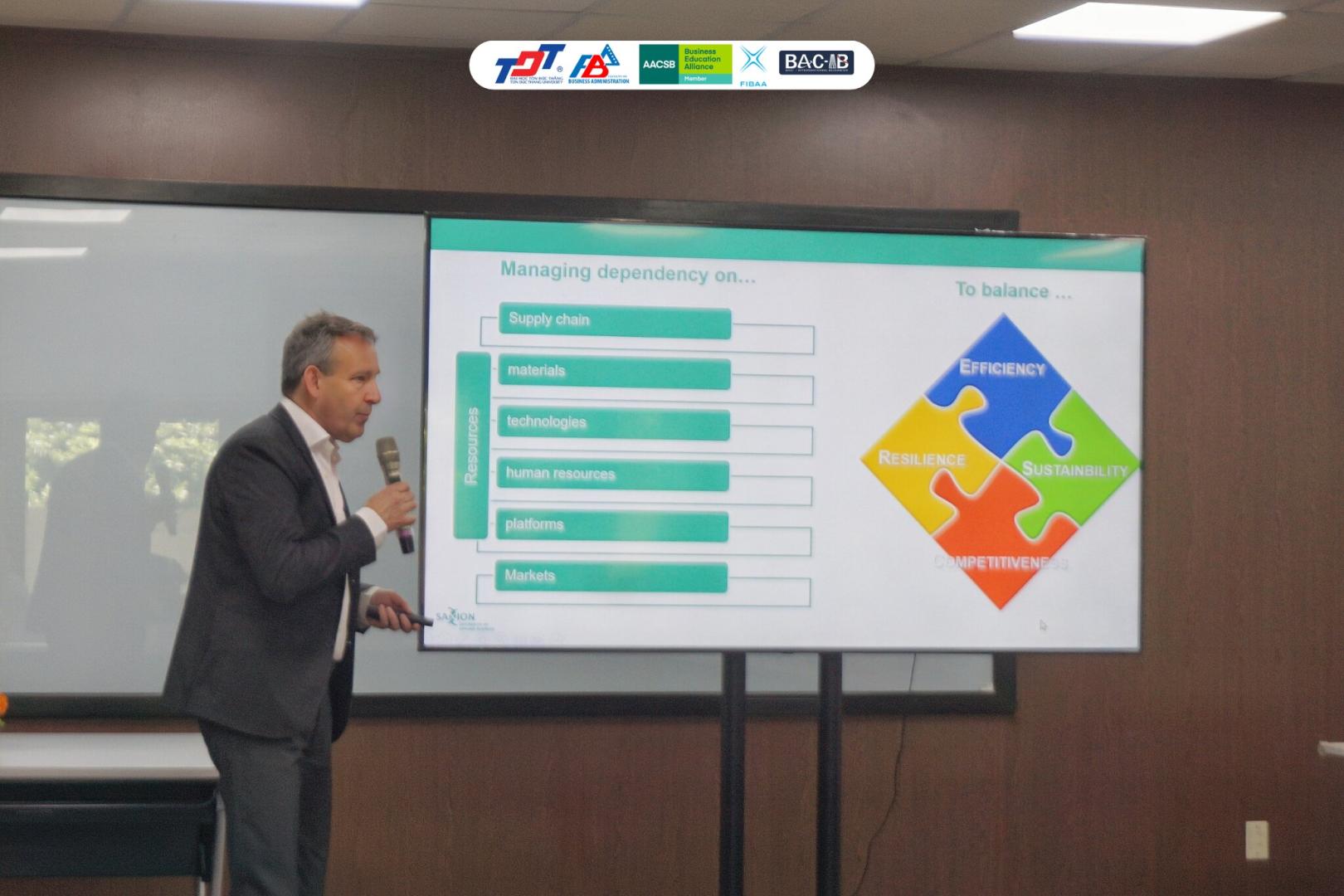
Prof. Timber Haaker presenting the Keynote "Managing Dependency: A New Perspective on Business Resilience" at the program.
Following the keynote, Mr. Sander Reinderink shared insights from the Netherlands on the evolving management mindset, highlighting the importance of business model innovation and international collaboration in building agile and sustainable organizations.
From an industry perspective, Ms. Le Hoang Anh delivered the presentation "Managing Sustainability in Practice," sharing Vinamilk's experience in embedding sustainability into its business operations through quality management, standards management, risk management, and organizational resilience.
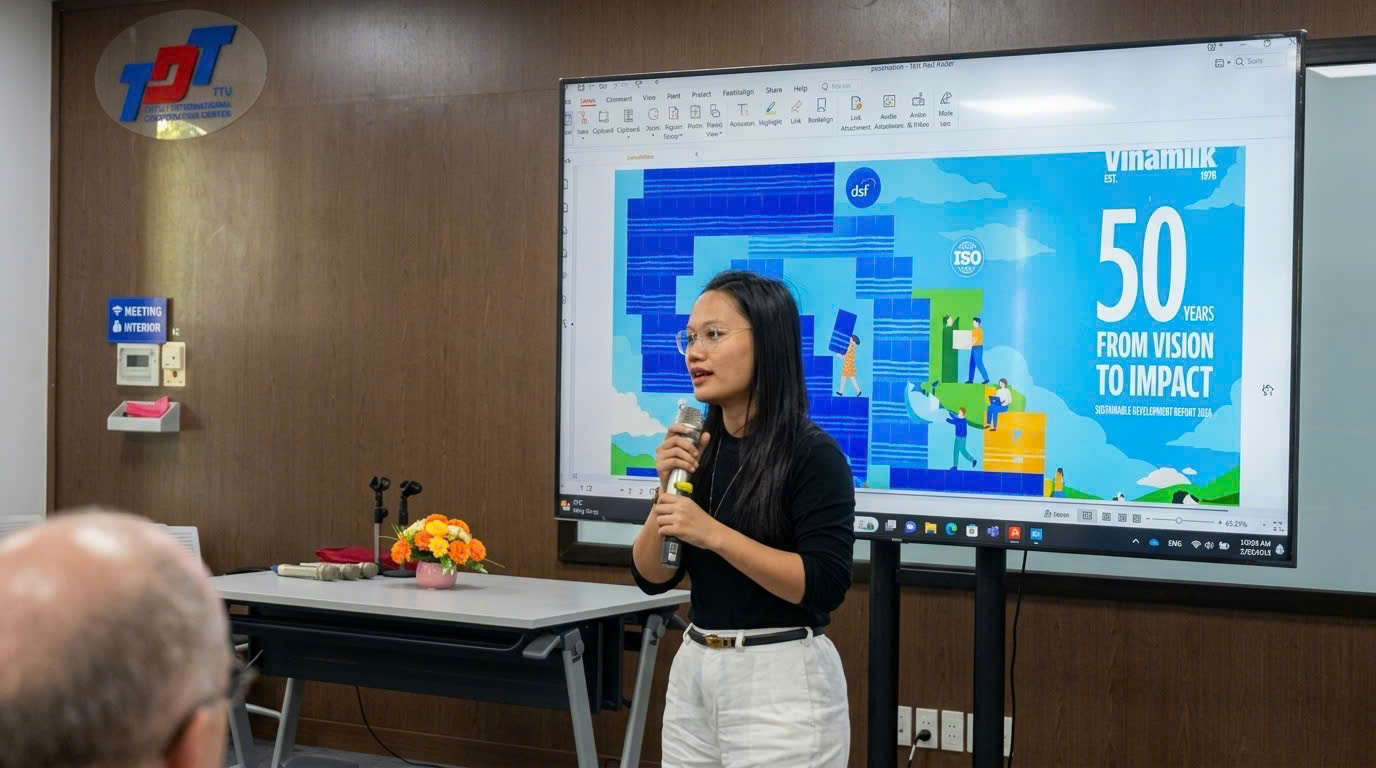
Ms. Le Hoang Anh - Head of Sustainability & Standard Management - System, Risk Management & Legal Department at Vinamilk presenting "Managing Sustainability in Practice" at the program.
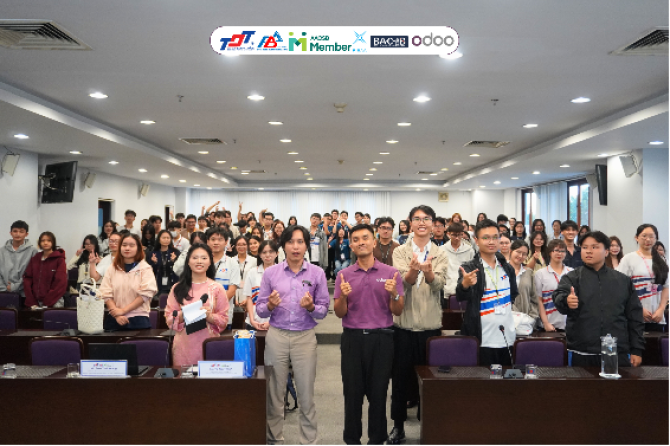
A highlight of the event was the panel discussion, "From Strategy to Action: Balancing Dependency, Resilience & Sustainability," featuring Prof. Timber Haaker, Ms. Le Hoang Anh, and Ms. Nguyen Xuan Yen.
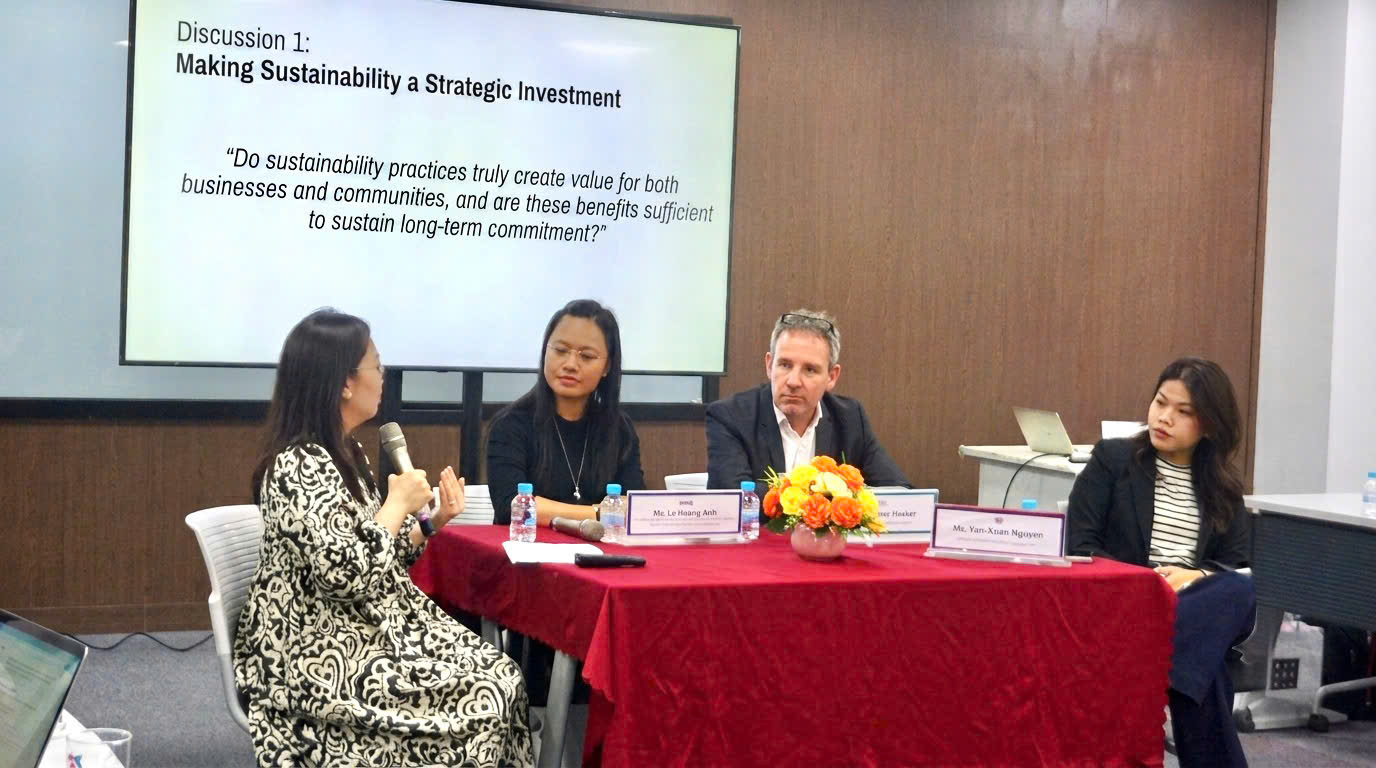
Roundtable discussion panel featuring Prof. Timber Haaker, Ms. Le Hoang Anh (Vinamilk), and Ms. Yen-Xuan Nguyen (BSA)
Moving beyond theoretical perspectives, the panel engaged directly with industry participants on issues that are increasingly relevant to businesses today, including: How can sustainability evolve from a compliance requirement into a strategic investment? How should organizations balance resilience with operational efficiency? As AI, data, technology, talent, and business ecosystems become increasingly critical, what new forms of dependency should organizations prepare for to maintain long-term competitiveness?
The discussion attracted active participation from representatives across logistics, manufacturing, marketing, education, service industries, and human resource management. The exchange of perspectives among academia, industry, and sustainability consulting offered valuable practical insights, enabling participants to explore new approaches to building agile, resilient, and sustainable organizations.
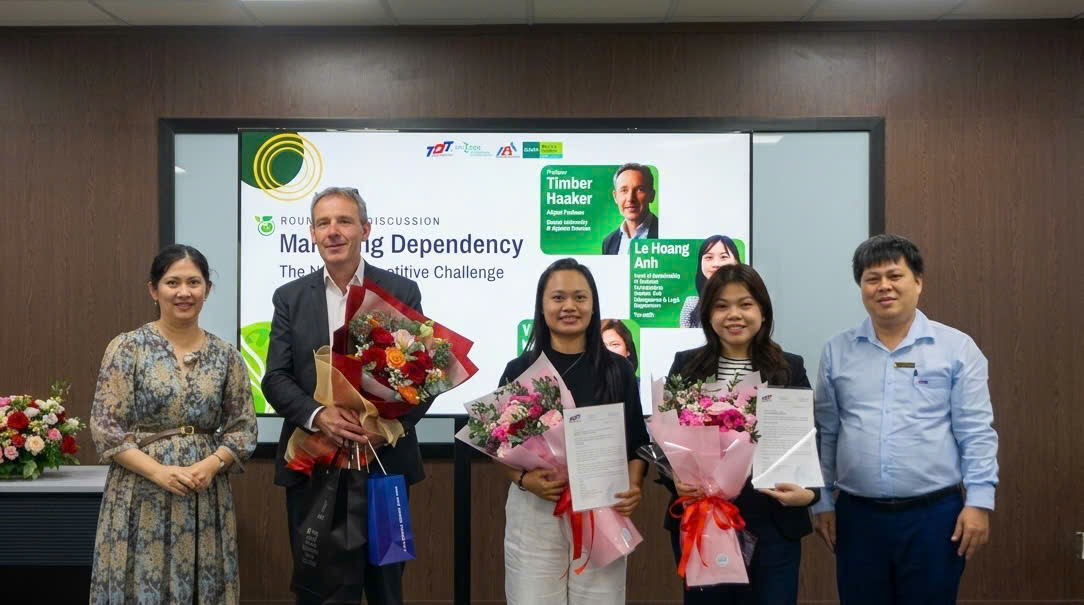
More than an academic forum, the roundtable reaffirmed the Faculty of Business Administration's commitment to strengthening connections between academia, industry, and international partners. Through its collaboration with Saxion University of Applied Sciences, the Faculty continues to advance its internationalization strategy, promote contemporary management thinking, and expand opportunities for cooperation in education, research, and the development of high-quality human resources.
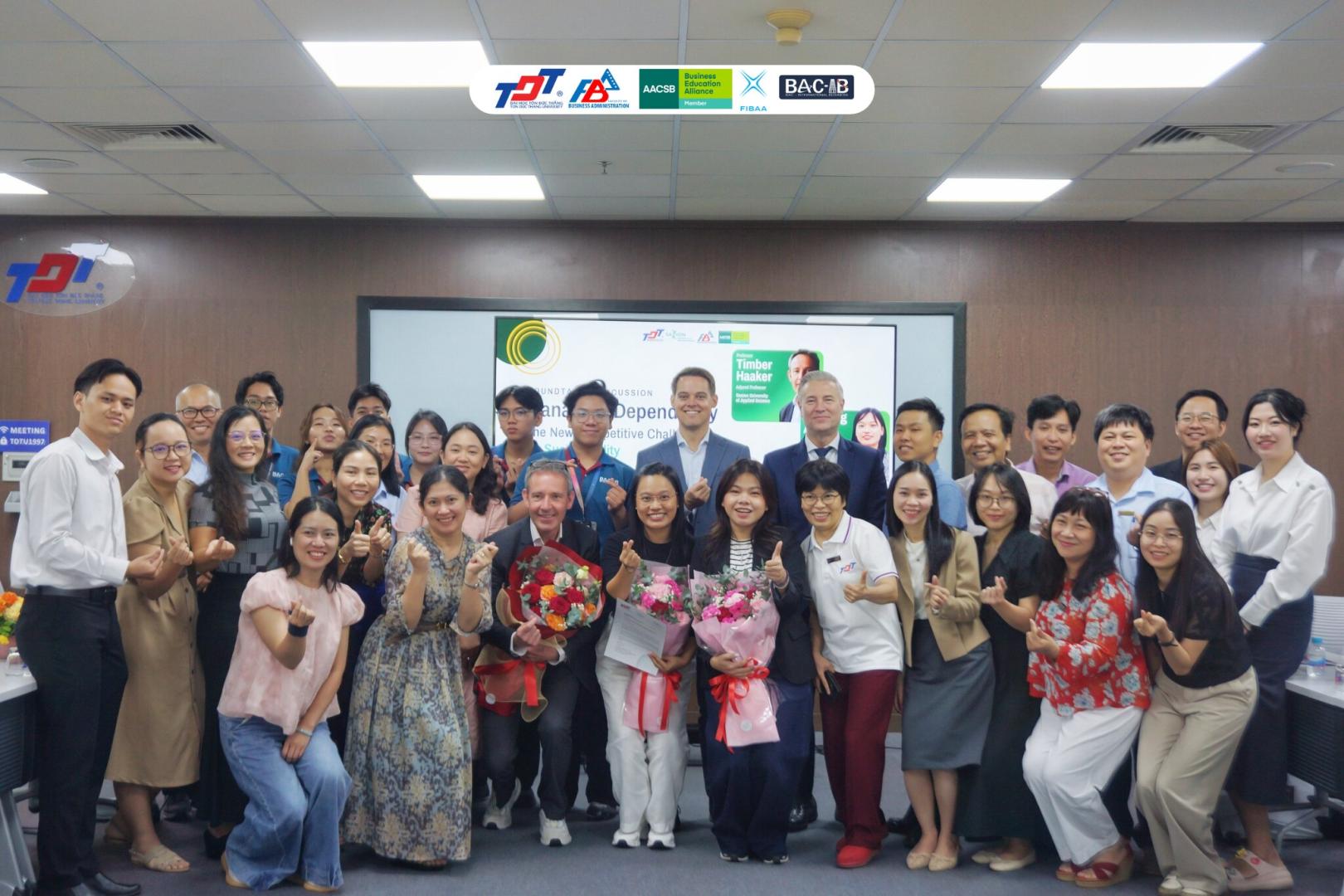
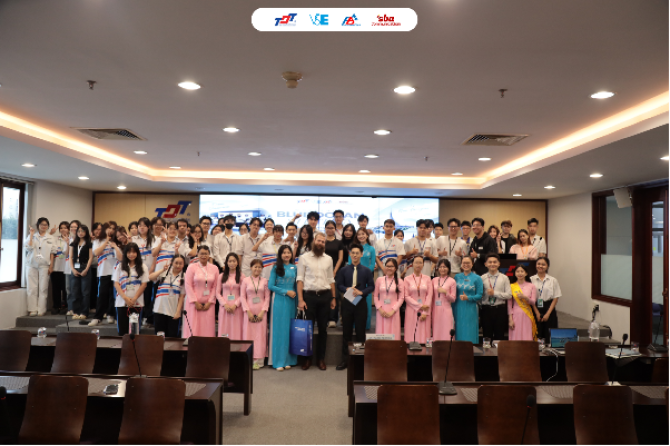
Delegates, guests, and representatives from the two institutions—Ton Duc Thang University and Saxion University (Netherlands)—taking a commemorative photo at the event.
#TDTU #FBA_TDTU #AACSB #GlobalEngagement #InternationalPartnership #Roundtable #Sustainability