Journal Club August 2026 – Ms. Pham Thi Phuong Dung: The Development of AI Word-of-Mouth (AI-WOM) in Marketing
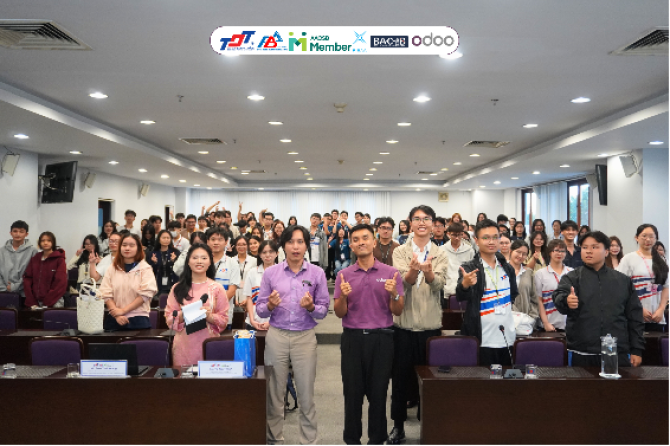
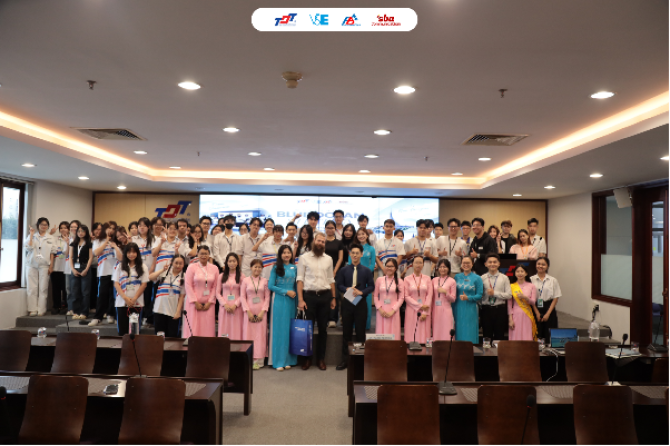
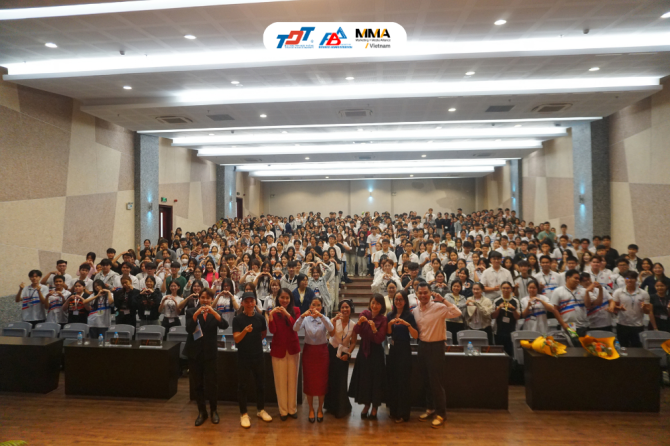
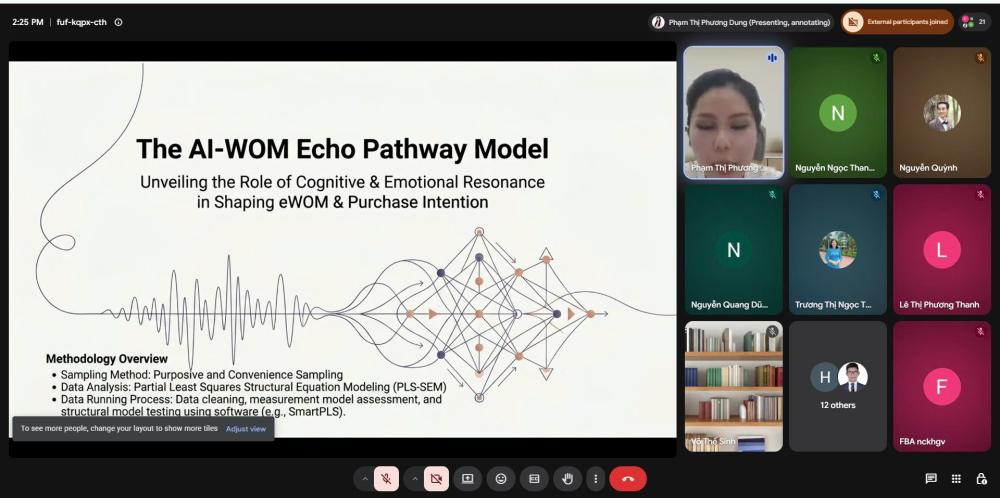
On the afternoon of August 24, 2026, the Faculty of Business Administration, Ton Duc Thang University, hosted its August 2026 Journal Club, featuring a presentation by Ms. Pham Thi Phuong Dung on the role of cognitive and emotional resonance in AI Word-of-Mouth (AI-WOM).
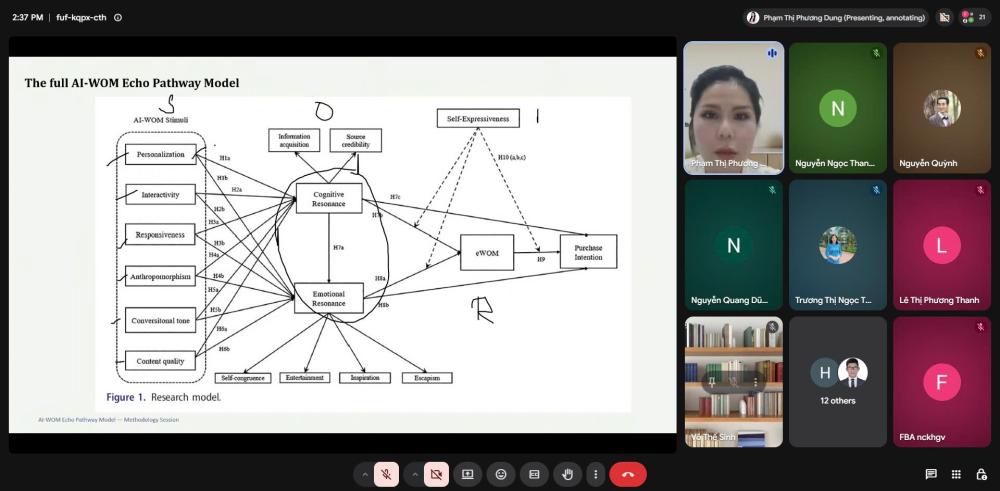
During the session, Ms. Pham Thi Phuong Dung introduced a study on the AI-WOM Echo Pathway model, published in the International Journal of Human–Computer Interaction. The study integrates Stimulus-Organism-Response Theory, Media Richness Theory, and Resonance Theory to explain how AI-related characteristics shape users’ psychological states and subsequently influence their behavioral responses.
The proposed model comprises six AI-WOM attributes, two forms of resonance, and two key outcomes: electronic word-of-mouth (eWOM) and purchase intention. Self-expression was incorporated as a moderating variable to examine whether individuals’ need for self-expression affects the extent to which they share AI-generated experiences.
The study employed Partial Least Squares Structural Equation Modeling (PLS-SEM) using data collected from 872 users in Vietnam who had experience interacting with AI-WOM. The findings indicate that all six AI-WOM attributes significantly influence emotional resonance. In contrast, only responsiveness and conversational tone have significant effects on cognitive resonance. Notably, emotional resonance positively influences both eWOM and purchase intention, while eWOM emerges as the strongest predictor of purchase intention.
Based on these findings, the presenter emphasized that businesses should not focus solely on the accuracy of AI-generated information, but should also pay greater attention to AI’s ability to evoke emotions and enhance user experiences. A conversational tone, inspirational content, entertainment value, and contextually appropriate responsiveness can contribute to stronger connections between consumers and brands.
The session concluded with a lively discussion focusing on the reliability of purchase intention as an outcome measure and the extent to which the transition from intention to actual purchasing behavior can be empirically verified. Ms. Pham Thi Phuong Dung noted that the study adopted a cross-sectional design and was conducted within a single-country context. Therefore, future research could employ longitudinal designs to track consumer behavior over time and extend the research across different markets to enhance the generalizability of the findings.
#TDTU #FBA_TDTU #AACSB #JournalClub #AIWOM #DigitalMarketing #ConsumerBehavior