Seminar Report: Exploring the Application of Data Envelopment Analysis (DEA) in Multidimensional Corporate Performance Research with Dr. Nguyen Trong Thanh
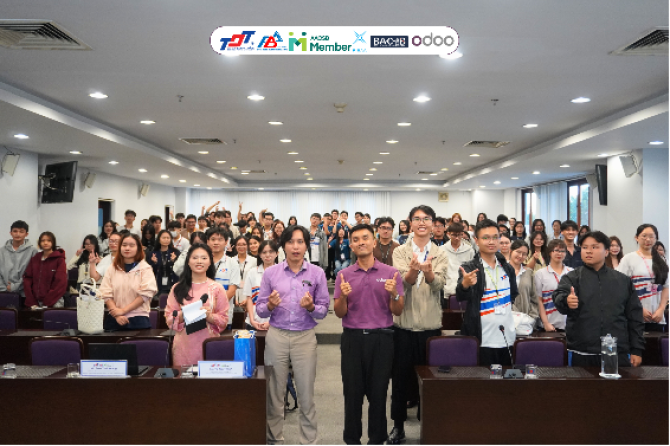
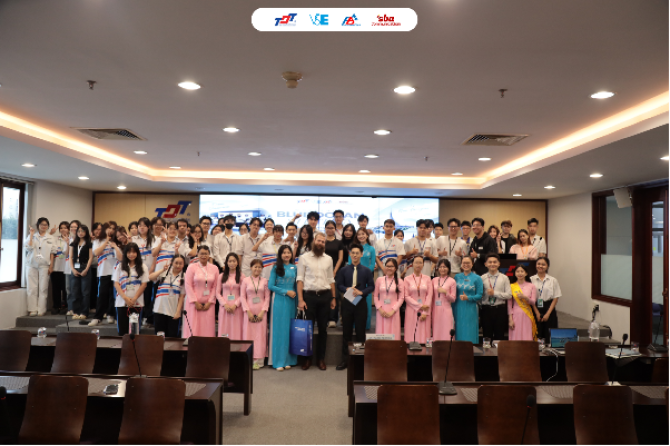
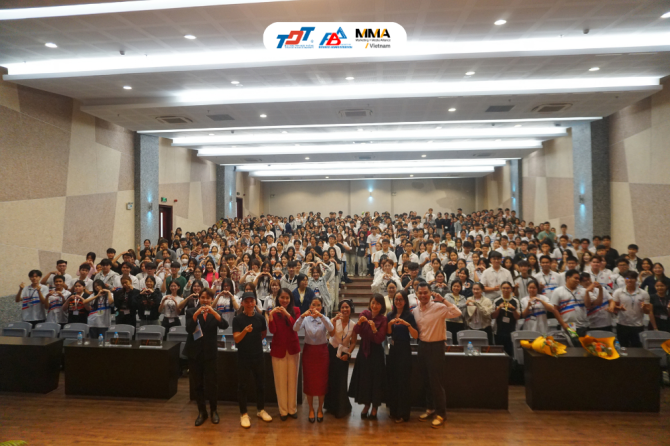
On June 18, 2026, the Faculty of Business Administration (FBA) at Ton Duc Thang University organized an academic seminar entitled “The Application of Data Envelopment Analysis (DEA) in Scientific Research: Practical and Theoretical Contributions”, presented by Dr. Nguyen Trong Thanh. The event attracted the attention of lecturers, graduate students, and undergraduate students engaged in scientific research, contributing to the updating of modern quantitative research methods, the enhancement of research capabilities, and the promotion of academic activities in line with the University’s internationalization orientation.
The program attracted nearly 100 students from different disciplines and individuals interested in research in business administration, finance, and sustainable development. With extensive research experience and international publications in the field of corporate performance, Dr. Nguyen Trong Thanh provided in-depth perspectives on modern analytical tools currently used in high-quality academic studies.
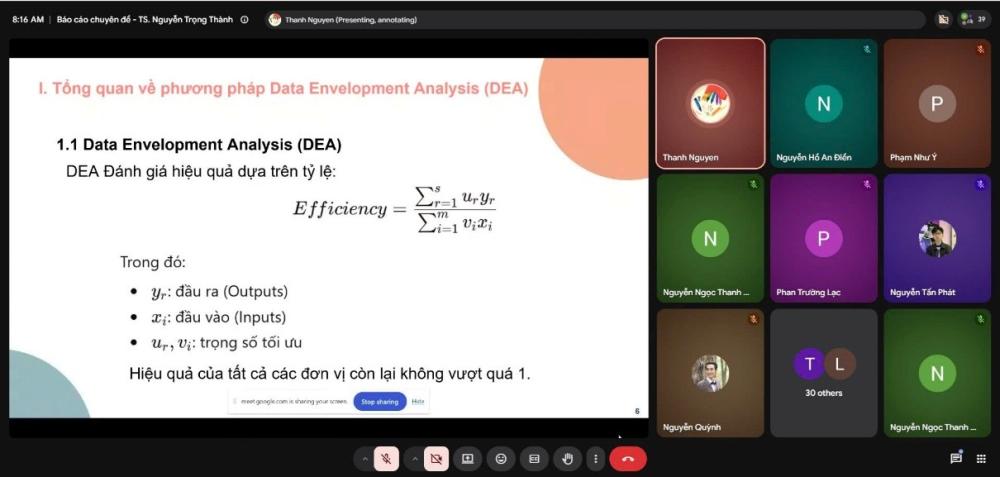
Session 1: Overview of Data Envelopment Analysis (DEA)
In Session 1, Dr. Nguyen Trong Thanh introduced Data Envelopment Analysis (DEA), a non-parametric efficiency analysis tool based on linear programming that is used to evaluate the relative efficiency of decision-making units. Unlike traditional evaluation methods, DEA focuses on identifying the most efficient units in order to establish the efficient frontier, thereby supporting comparison and the identification of benchmark models for the remaining units. The speaker also analyzed the advantages and limitations of this method in corporate performance research.
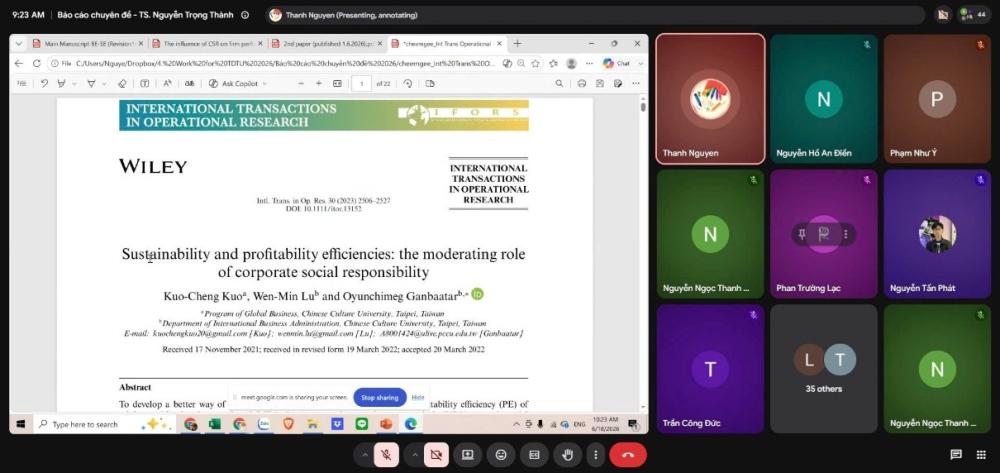
Session 2: Theoretical Foundations and Strengths of Data Envelopment Analysis (DEA)
In Session 2, Dr. Nguyen Trong Thanh presented the development of DEA models, from CCR and BCC to input- and output-oriented optimization approaches. In particular, the speaker introduced the Dynamic Network Slacks-Based Measure (DNSBM) model, a method that enables the evaluation of corporate performance over time and the analysis of the links among innovation, sustainability, and profitability.
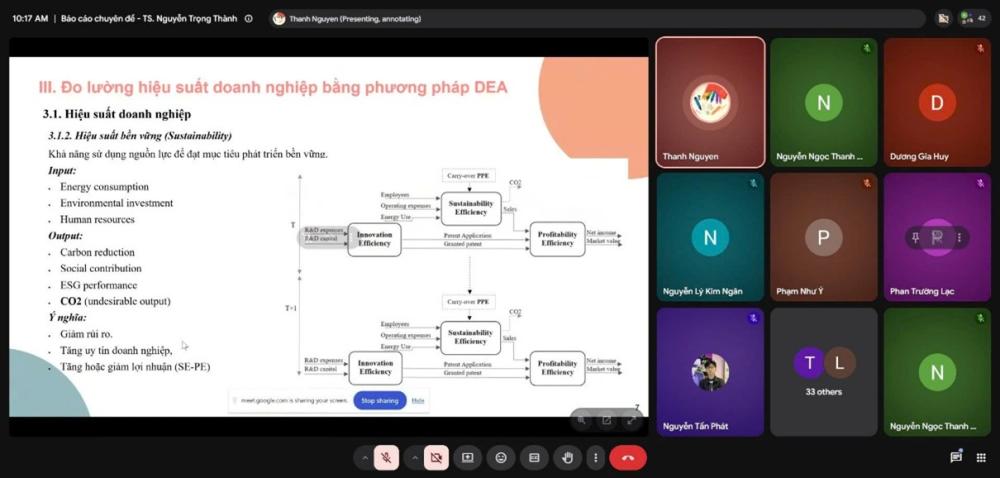
Session 3: Measuring Corporate Performance Using Data Envelopment Analysis (DEA)
In Session 3, Dr. Nguyen Trong Thanh shared an approach to evaluating corporate performance based on three dimensions: innovation efficiency, sustainability efficiency, and profitability efficiency. This research model helps clarify the relationships among innovation activities, sustainable development, and a firm’s ability to generate long-term economic value.
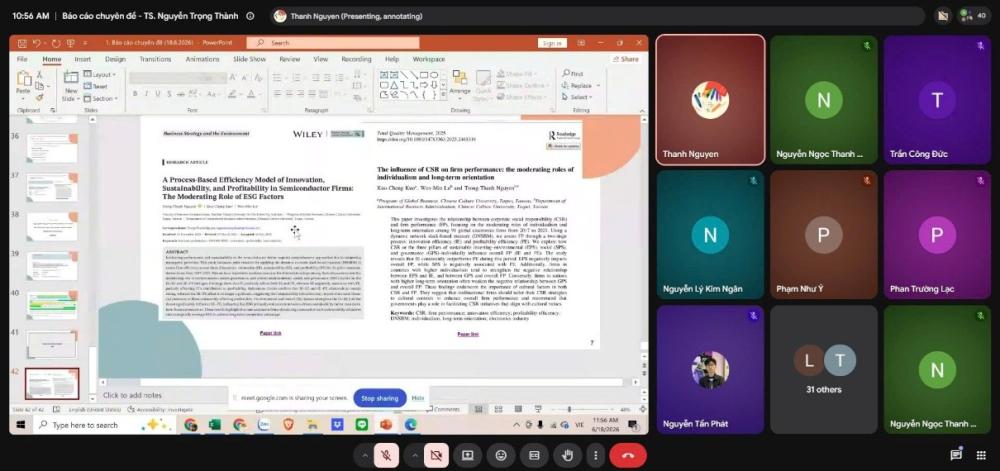
Session 4: Case Study: Applying DEA in Exploratory Research on the Bidirectional Relationship between Sustainable Development and Corporate Performance: The Roles of ESG and National Cultural Values
Through empirical studies on global technology and semiconductor corporations, the speaker delivered Session 4 with a number of important findings on the relationships among innovation, sustainable development, and financial performance. The session also clarified the roles of ESG and national cultural factors in corporate performance and sustainable development.
In particular, the discussion session was lively and engaging, with active participation from students and graduate learners. Many questions were raised regarding the selection of research models, data processing, and the interpretation of results in international studies. The speaker’s insights helped participants strengthen their methodological knowledge and broaden their future research directions.
The program concluded with many valuable academic exchanges, contributing to the enhancement of learners’ research capabilities and the promotion of scientific research activities within the Faculty of Business Administration. Through the regular organization of in-depth seminars, the Faculty continues to affirm its commitment to building a dynamic academic environment, connecting research with practice, and meeting international quality standards.
#TDTU #FBA_TDTU #AACSB #Innovation #AcademicImpact #FacultyResearch #ResearchSeminar